
by Mo Khanzada

The Steam Machine price is finally here, and it is not cheap. Valve’s living-room SteamOS box starts at $1,049 for the 512GB model without the controller. The 2TB model is $1,349, and the 2TB bundle with the Steam Controller lands at $1,428.
That number shocked and disappointed a lot of people, but it probably should not have.
A couple of weeks before Valve announced the Steam Machine’s price, the Steam Deck OLED models suddenly got much more expensive. As we covered when the Steam Deck OLED price hike first hit, Valve raised the 512GB OLED model to $789 and the 1TB OLED model to $949. Based on the prior pricing, that meant the 512GB model jumped by $240, while the 1TB model jumped by $300.
At the time, that felt like a warning flare. Now it feels like the Steam Deck OLED price hike was finishing its sentence.
Steam Machine Price Starts at $1,049
The Steam Machine is positioned as a small living-room PC running SteamOS, not a traditional console. That distinction matters because the price lands in a strange place. It looks like something that should compete with consoles, but it is being priced more like a compact gaming PC.
That is where the debate starts.
For some players, the Steam Machine is exactly what they wanted: a clean SteamOS box for the TV, built by Valve, designed around Steam, and small enough to avoid turning the entertainment center into a PC repair shop. For others, $1,049 for the entry model is hard to swallow, especially when the 2TB bundle with the controller reaches $1,428.
That is a lot of money for a little cube.
And because this is Valve, I cannot look at a mysterious cube-shaped object without thinking about Portal. At $1,049, this thing better not just run Steam games. It better offer emotional support.
The Steam Deck Set the Expectation
Part of the reaction comes from what the Steam Deck trained players to expect. The original Steam Deck was not just appealing because it was a handheld PC. It felt like Valve had managed to make PC gaming more accessible in a form factor that actually worked.

The real trick was efficiency. Valve got playable PC gaming performance out of a low-power handheld, and that made the Steam Deck feel practical instead of just possible.
It was a Frankenstein machine in the best sense, but that point needs some nuance.
I was talking with fellow writer Lucius about this and shout out to him for helping sharpen the point. Those are the kinds of Discord conversations I appreciate: not WWE promo battles where the loudest person wins, but actual back-and-forth that makes the take better. I still enjoy a good verbal chair shot, but the point is to get it right.
The Steam Deck APU was not just a binned laptop chip, but it also was not Valve hand-carving silicon in a basement with a soldering iron and a dream. Valve worked with AMD on a semi-custom APU, AMD designed it using Zen 2 and RDNA 2 building blocks, and TSMC manufactured it on an existing 7nm process.
That nuance matters because the Steam Machine appears to follow the same playbook. It is not some weird break from Valve’s hardware strategy. It takes familiar AMD architecture, tunes it around a specific box, runs it through SteamOS, and lets the software layer do a lot of the heavy lifting.
The Steam Deck did that in handheld form. The Steam Machine is trying to bring that same idea to the living room.
Why the Steam Machine Price Feels So High
The issue is not that Valve suddenly forgot how to make interesting hardware. The issue is that the hardware market changed.
Memory is expensive. Storage is expensive. AI demand is eating up parts of the market. You do not need to understand every supplier contract to understand the basic consumer version: the stuff inside gaming hardware is getting more expensive, and eventually that shows up in the price.
The Steam Deck OLED price hike was the first sign. The Steam Machine is the bill.
There is also the console problem. The Steam Machine looks like a console, but it is not really priced like one. Console makers can sometimes eat more of the hardware cost because they make money later through their stores, subscriptions, accessories, and ecosystem. That is the locked-in console model.
The Steam Machine is different. It may sit under your TV like a console, but Valve is still selling something closer to a PC. That makes the price feel more honest, but also more painful.
Our AMD BC-250 Steam Machine Experiment
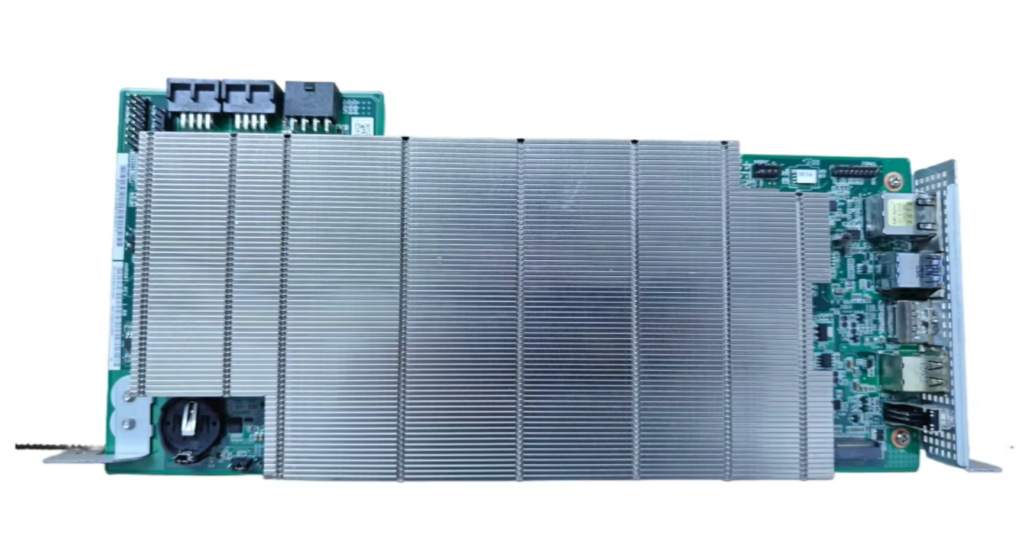
That is why I also want to test the other side of this argument. Over the last few days, I have been working with KAsante, Everborn Saga, and FludZilla from the Gaming Circle podcast on our own version of a Steam Machine built around the AMD BC-250, a strange little board using a cut-down PS5-derived APU. It is not a one-to-one replacement for Valve’s Steam Machine, and I am not pretending performance is automatically the same. That is the point of testing it.
Even in a worst-case version of the build, we are looking at something closer to $500, roughly half the price of the entry Steam Machine and far below the $1,428 2TB bundle with the controller. The goal is simple: can we build something that plays Steam games, runs a SteamOS-style setup through Bazzite or Windows if needed, and gets close enough to make the price gap feel ridiculous? Maybe yes, maybe no, but either way, we are going to keep digging.
Join us on Discord to continue to the discussion or back to the blog for more like this.