
by Soiltek

Valve brought the Steam Deck OLED back in stock, but it came back with a much uglier price tag. The 512GB Steam Deck OLED is now $789. The 1TB model is now $949. That is not a little pricing tweak. That is a full-on “wait, what happened here?” moment. Valve attributes the increase to rising component costs and ongoing logistical challenges—an explanation that isn’t entirely ridiculous. Memory and storage prices have been getting rough across the industry. But customers don’t buy explanations; they buy hardware.
And the hardware did not change. That is where this gets messy. The Steam Deck OLED used to live in a very comfortable lane. It was not the most powerful handheld PC, but it did not need to be. It had SteamOS, a great OLED screen, a smart design, and the kind of pick-up-and-play convenience that most Windows handhelds still struggle to match. At $549 or $649, those tradeoffs made sense. You were not buying the biggest spec sheet. You were buying the cleanest handheld PC experience.
At $789 and $949, that argument has to fight a lot harder. The uncomfortable part is that Valve may have priced the Steam Deck OLED into a category it was never built to dominate. At nearly $1,000, people are going to compare it against machines with stronger chips, more RAM, newer hardware, and louder spec sheets. They are not wrong for doing that. Once the price climbs that high, the magic trick gets expensive enough that people are allowed to check for wires.
That is where the ASUS ROG Ally X becomes a problem. Best Buy lists it at $999.99 with an AMD Ryzen Z1 Extreme, 24GB of RAM, 1TB of storage, Windows, and a 7-inch 1080p 120Hz display. That puts it only $50 above the 1TB Steam Deck OLED. The Steam Deck still has OLED, and SteamOS is still a major advantage. But $50 is not a moat. It is barely a curb.

The cheaper, standard ROG Ally makes the 512GB Steam Deck OLED look weird from the other direction. Best Buy lists the white ROG Ally at $599.99 with an AMD Ryzen Z1, 16GB of RAM, 512GB of storage, Windows, and a 7-inch 1080p 120Hz display. That means Valve’s 512GB OLED model is sitting $190 higher than an ASUS handheld. No, the cheaper Ally is not the same class as the Ally X. No, Windows is not suddenly elegant on a handheld. But at checkout, $190 is loud. Plus, those rear ergonomic grips are excellent.
There is also the fun, messy conspiracy-theory corner of this. Maybe Valve is raising Steam Deck OLED prices to absorb the cost pressure of its next wave of hardware. Maybe this helps make room for the rumored Steam Machine. Maybe Valve knows a dedicated console is going to be expensive, and this makes the higher end of its hardware lineup feel less shocking when that price finally lands. To be clear, that is speculation. Valve has not said that. But the timing makes people wonder, especially when the Steam Deck OLED is suddenly brushing up against devices that are newer, stronger, or both.
The more grounded concern is even simpler: if storage and component costs are already pushing the Steam Deck OLED this far upward, what does that mean for future Valve hardware? A handheld can justify some premium because it has a screen, battery, controls, and portability. A living room box does not get that same excuse. If Valve’s next machine lands north of $1,000, it will need a very clear reason to exist next to consoles, gaming PCs, and the growing pile of handheld PCs already fighting for attention.
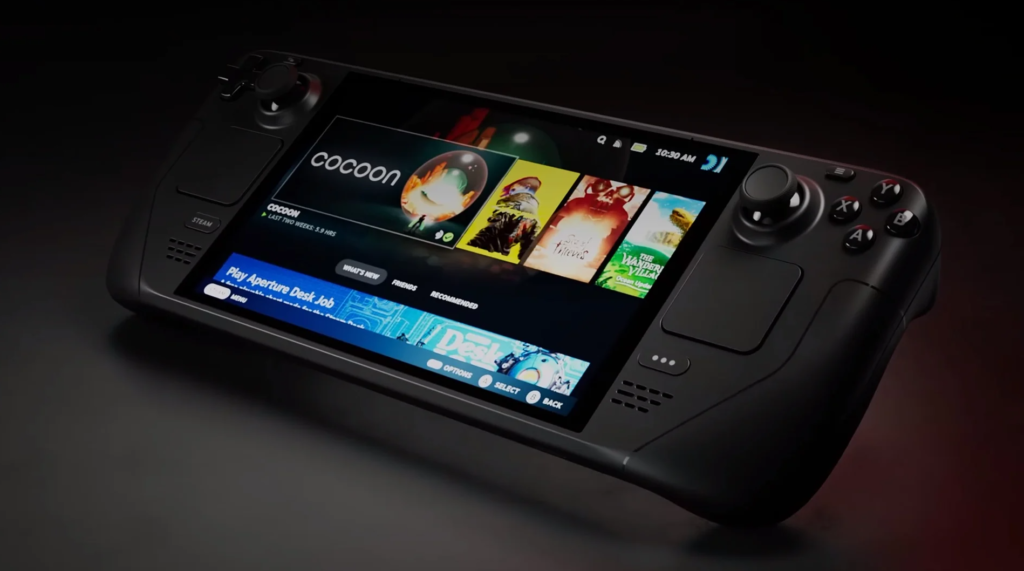
That’s the squeeze. The Ally X makes the 1TB Steam Deck OLED look underpowered. The standard Ally makes the 512GB Steam Deck OLED look expensive. Handheld PC market pricing makes it look like the entire industry is sprinting toward luxury pricing with a backpack full of RAM invoices.
Valve still has a great device. That is probably why the Steam Deck OLED sold through quickly even after the price hike. But that only makes the situation stranger. The market can complain with one hand and hit the buy button with the other.
The Steam Deck OLED is still one of the best handheld gaming experiences around. But it is no longer the easy value recommendation it used to be. Valve did not just raise prices. It pushed the Steam Deck into the middle of a hardware knife fight. And now SteamOS, OLED, and convenience have to justify a much bigger bill.
Join us for more gaming, tech, and community discussions.