
YEO’s path from The Friends of Ringo Ishikawa to Fading Afternoon and The Concrete Sutra traces a body of work shaped by aging, loneliness, discipline, failure, and games that refuse easy explanation.
I found Fading Afternoon on Steam months after release, when early reactions were still mixed enough to give cautious players pause. I did not pause for long. Once I started playing, I could not stop.
At first, it looked familiar: a pixel-art crime drama about an aging yakuza returning to the streets. Then it became stranger: beat’em up, life sim, tragedy, puzzle box, and quiet argument about mortality. It refused to hold my hand. To understand it, I had to test routines, waste days, lose fights, and pay attention.
That curiosity led me back through The Friends of Ringo Ishikawa, Arrest of a Stone Buddha, and the creative lineage connecting them. Fading Afternoon was no accident. It was the latest work from a developer who makes brawlers behave like personal essays.
Why YEO Chose a Written Interview
When I first reached out to YEO, I hoped to bring him onto The Gaming Circle Podcast to discuss The Concrete Sutra. He was interested, but candid: “Actually, I’d love to join your podcast” he wrote, “but my English speaking isn’t that great. So sadly, it’ll be an embarrassment for me and a hard time for your listeners.”
That humility shaped the exchange. Instead of a live interview, we corresponded in writing about process, failure, discipline, family, art, and what comes after Fading Afternoon.
How YEO Builds Indie Games From Gameplay First
Ask YEO about meaning, and he starts with mechanics. “Games are games,” he says, “so I always start with gameplay.” For a beat’em up, that begins with something elemental: “a player’s character punching a standing enemy.”
Only when that action feels satisfying does he move forward. The button press, animation, damage reaction, enemy wave, and screen-to-screen rhythm become the seed. “When you have at least one loop,” he says, “you have a game.”
That tactile core comes first. Routine, atmosphere, loneliness, failure, time pressure, and meaning gather around it later. “After you have a loop, you can apply aesthetics,” he says. “And only after that I add an idea.”
The idea is not the beginning. It arrives after the game has a body. YEO jokes that his ideas make his games less fun as entertainment but richer as art. The ideas, he says, “spoiled them.”
From Ringo to Fading Afternoon: YEO’s Games as Life Stages
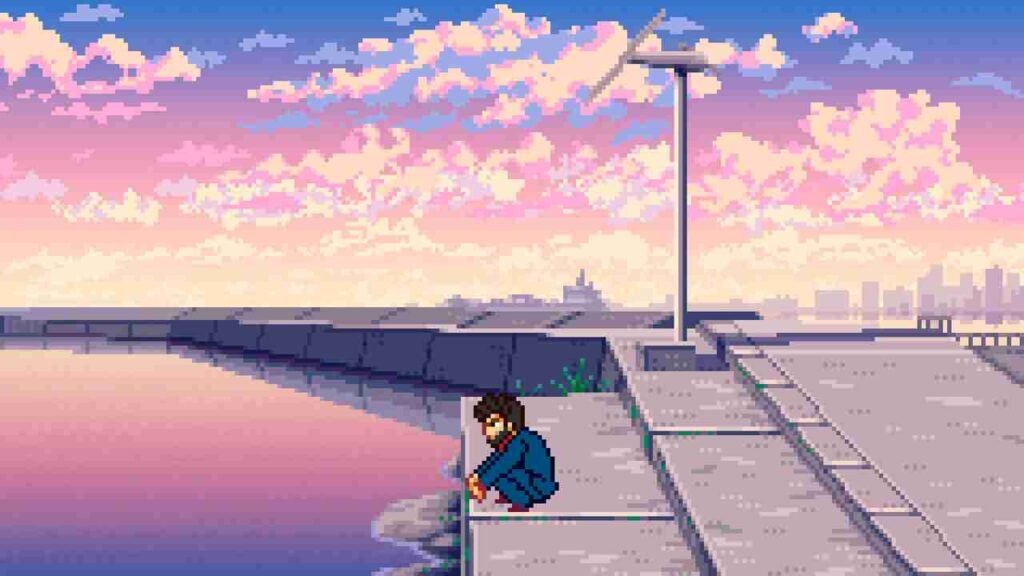
YEO’s wider audience began with The Friends of Ringo Ishikawa, a 2018 open-world beat’em up about a delinquent facing friendship, routine, violence, and the fear of being trapped. Later released on Mac, Nintendo Switch, and Xbox One, it built its reputation on a simple tension: brawler on the surface, existential coming-of-age story underneath.
For YEO, Ringo is a memory of youth. “My games are very personal,” he says. It is about not knowing what to do with life, wasting talent, being left behind, and holding onto principles.
Arrest of a Stone Buddha, released in 2020, moved into colder territory: a hitman story about loneliness, disconnection, emptiness, and realizing talent alone is not enough. YEO still calls it his best game. “My best game is Arrest by far,” he says. “It almost has no flaws. But the players didn’t enjoy it.”
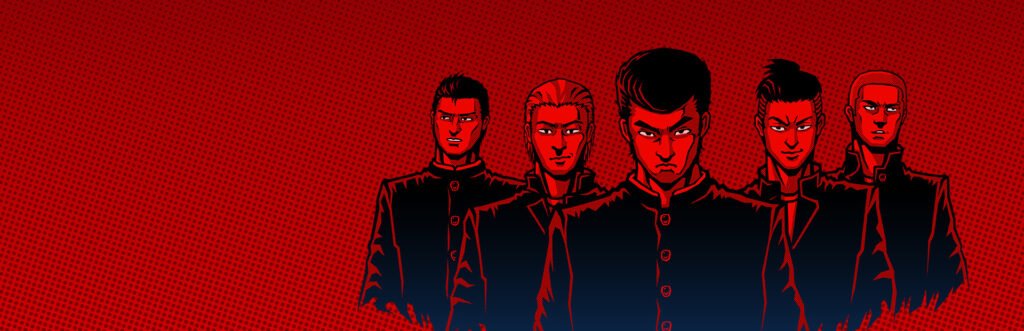
Then came Fading Afternoon, released on PC in September 2023 and later on Nintendo Switch in 2024. It follows Seiji Maruyama, an aging yakuza known as “Gozuki,” returning from prison to a world that may no longer have room for him. Beneath the crime drama, YEO says, is a game about age, death, younger people overtaking you, and regret.
That is why Fading Afternoon’s opacity matters. Seiji enters near the end, surrounded by systems already in motion, rules he can no longer master, and days that vanish no matter how carefully the player spends them.
Why YEO’s Indie Games Are Hard to Balance
Combat and individual loops come easily to YEO. The hard part is making the whole game breathe.
“The most difficult thing is to make it work as a whole,” he says. “The more loops you have, the harder to balance and test them.” In open games like Ringo and Fading Afternoon, players wander, repeat routines, miss scenes, and create rhythms he cannot fully predict.
Fading Afternoon fought him almost to the end. Each system worked alone, but not together. “The game was boring,” he says. “Somehow I managed to make it playable at the end.”
Why YEO Cuts Good Ideas From His Games
One of YEO’s defining instincts is his willingness to cut features he likes when they betray the character at the center of the game.
For The Friends of Ringo Ishikawa, he wanted dating mechanics. They fit the school-life frame, but not Ringo. “The more I wrote and got to know the characters,” he says, “the more I understood that Ringo couldn’t be a womanizer, it doesn’t fit his loyal personality at all. So, I had to remove it.”
Arrest of a Stone Buddha demanded the same restraint. More city activities were possible, but they would have weakened the boredom and loneliness YEO wanted players to feel.
That restraint is why Fading Afternoon feels so deep. Its systems orbit one question: what matters when time is running out?
How YEO Handles Player Feedback
YEO has a generous view of criticism. If someone says Ringo’s ending is flawed, the controls are bad, or the game explains too little, he agrees. “Every player is right about his feelings about any game.”
But agreement is not obedience. For a solo developer, the only constant critic is yourself. “I agree with all takes,” he says, “but I make the game I want it to be.”
Fading Afternoon clarified something painful: players may not like his action gameplay. He accepts that without changing course. “I can’t do anything about it, cause I really like it. So, I’ll continue to do it as I like.”
Independence, Fear, and Wasted Talent
When YEO talks about independence, he starts not with money, but with fear: the fear of wasting his talent.
He cites A Bronx Tale: “The saddest thing in life is a waste of talent.” Before releasing Ringo, that fear haunted him. When the game finally launched on Steam, he felt relief because he had given everything.
His path was hardly polished. He never worked as a programmer and did not own a PC until 25. A friend showed him HTML, a Nekketsu fan forum led him to Game Maker, and within weeks he had built a beat’em up prototype.
From 2006 to 2016, he made fan games as a hobby before turning Ringo into a commercial release. On Halloween 2017, he quit his job. “It wasn’t necessary,” he says, “but as a former gambling addict I knew that you have to risk something valuable if you want to win big.”
Ringo was not an instant miracle. Its first year earned less per month than his old job, but the Japanese Switch release changed everything, reaching third among digital games and seventh overall that week. “It finally gave me commercial freedom,” he says.
He used that freedom to stay small: no fancy office, no expansion, no studio machine. The structure stayed simple: one background artist, one animation artist, and YEO doing the rest.
“The saddest thing in life is a waste of talent.”
How YEO Balances Family and Solo Game Development
For all the mythology around indie sacrifice, YEO rejects the premise. “I don’t make any sacrifices actually,” he says. “My first priority is my family.”
His routine is domestic before it is artistic: school pickups, dance lessons, family dinner, time with his wife and daughter. Only after they sleep does he make games.
“Being an independent developer gave me so much more time to spend with a family,” he says. The tortured-auteur fantasy gives way to something quieter.
YEO’s Advice for Solo Developers: Discipline Over Motivation
After nearly 20 years of making games almost every day, YEO rejects the romance of motivation. “I don’t really believe in motivation,” he says. “I believe in discipline.”
He points to advice he associates with Akira Kurosawa and Balzac: work every day, and do not stare too far ahead or behind. “You just need to look 10 meters further,” he says.
For aspiring solo developers, his lesson is simple: “Game development is a marathon,” he says. “Sprinters won’t make it.”
His momentum comes from small progress: pressing keys, arranging folders, cleaning a desk, finishing one tiny task. “These little accomplishments will charge your battery to work further,” he says.
He works by time, not deadlines: commit the hours, follow the work, and let the project accumulate. Eventually, “80% of a project is done,” and then “you need to just finish it.”
His advice is unsentimental: choose a genre you love, work daily, and avoid what drains you. “When this desire is lost, everything ends. So, it’s the only fuel and KPI.”
What The Concrete Sutra Means for YEO’s Future
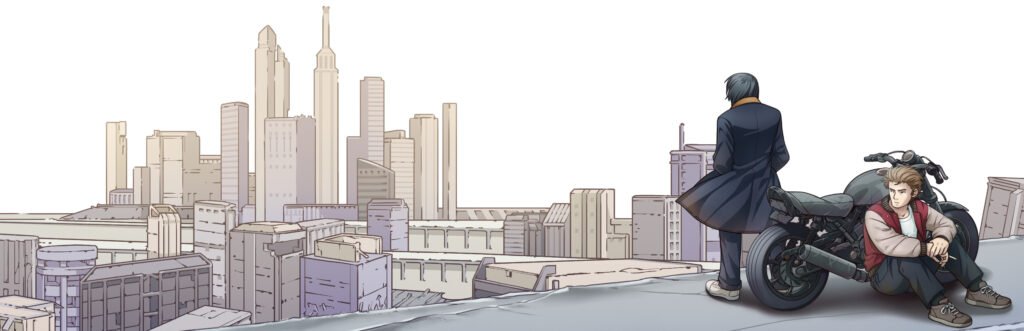
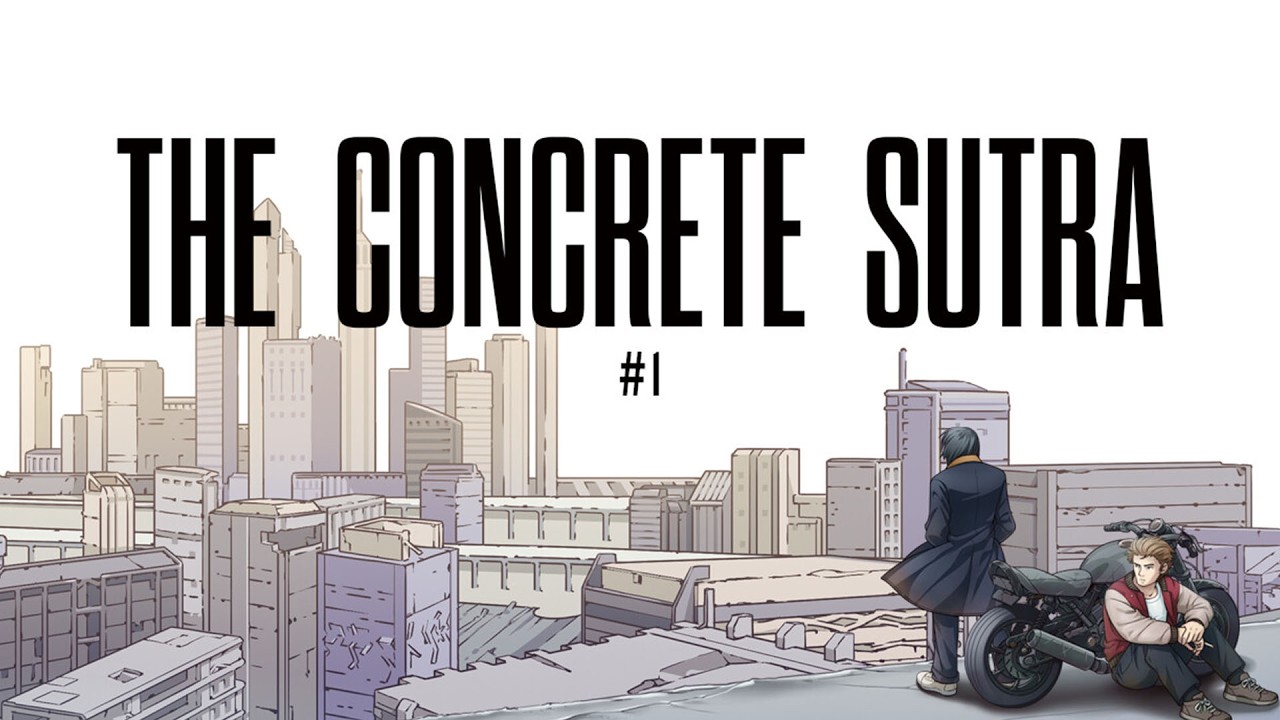
YEO’s next project, The Concrete Sutra #1, is planned for PC via Steam in 2027. Public listings describe it as the first episode of a post-apocalyptic beat’em up action RPG about former bikers River and Cosmo, built around short, direct action rather than grinding or skill trees.
YEO is cautious about saying too much. “Speaking about an unreleased game is quite strange for me,” he says. More importantly, The Concrete Sutra is only the beginning. “Nothing will be cleared at the end of it,” he says. “It’ll be just the very beginning of the journey.”
That makes it a break from Ringo, Arrest, and Fading Afternoon, which feel self-contained even when they leave room for interpretation. The Concrete Sutra is deliberately episodic, and its bigger twists and systems will come later.
He is blunt about the risk: “The first installment could feel too much inferior to my previous games,” he says. “My idea will become clear only by the end.”
The Concrete Sutra has already changed forms several times: turn-based JRPG, manga, then game again. The manga version became a 26-page first chapter on Comixology, sold 15 copies, and disappeared after the platform folded into Amazon.
He hopes to release The Concrete Sutra in Spring 2027, though art production could push it to Fall. Steam is the priority, while Switch remains uncertain after what he describes as Fading Afternoon’s severe commercial disappointment there.
Why Game Releases Are the Hardest Part for YEO
Most developers treat launch as the finish line. YEO talks about it almost like an illness. “The problem with releases is that they last for a week at best,” he says. “And after that nobody cares about the game anymore.”
By Fading Afternoon, he cared less about releases. Sanctions complicated his ability to receive Steam money, forcing him to work through a publisher. The game was ready months early, unlike Ringo and Arrest, yet launch still brought bugs. “My games are just too complex,” he says, “and maybe I’m not the best programmer after all.”
For him, development is life and release is exposure. “For me, the positive side of game development is everyday development itself,” he says, “and the negative side is the release of a game.”
He deleted a Twitter account with roughly 12,000 followers and a YouTube channel with about 3,000, and does not plan major PR for The Concrete Sutra. If launch hurts, he has a simpler answer now: “I’ll just start the next project the day after.”
How YEO Designs Endings Around Emotion
If players do not finish, YEO hopes they remember the atmosphere: music, pixel art, and the quiet ache of the environments. He credits the artists and composers for that. “It always kudos to them, not me,” he says.
If they finish, he hopes they remember the ending. “I try to design the end to be the most impactful moment of the game,” he says. “I want them to have complex emotions. I want them to feel the characters.”
That may be the secret of YEO’s work. You do not just watch Ringo’s uncertainty, observe the emptiness of Arrest, or understand Seiji aging in Fading Afternoon. You feel those conditions through play.
“I try to design the games so you could feel the character through gameplay,” YEO says, “and become the character at the culmination.”
Whats the Point? Conclusion
YEO’s games ask for trust. They can be abrasive, opaque, and easy to underestimate, but their friction is the point.
He uses genre to hold aging, regret, loneliness, loyalty, wasted talent, and the stubborn dignity of continuing anyway.
If release hurts, reviews are cold, or the audience does not immediately understand, YEO will do what discipline has taught him to do.
He will start the next project the very next day.
The Concreate Sutra #1 is slated for a March 2027 release but it could be moved to the fall.
Join us on Discord to continue to the discussion or back to the blog for more content like this.