
The discussion around Marvel’s Wolverine has become a discussion about a company that did not develop or publish it. Reports identifying Sweet Baby Inc. in the credits have renewed criticism of the consultancy’s relationship with Insomniac. Insomniac developed the game, and Sony Interactive Entertainment published it. Yet the presence of an outside narrative consultant can become the explanation for creative decisions whose origins the public has not established.
There are reasonable questions to ask about that involvement. What did Sweet Baby contribute? Did its work improve the story? Which recommendations survived development? I have not played Wolverine, and I am not prepared to defend its writing or dismiss the complaints of people who have. What concerns me is the confidence with which a consulting credit can be treated as an answer to all those questions. Knowing that a company participated in development is not the same as knowing what authority it held.
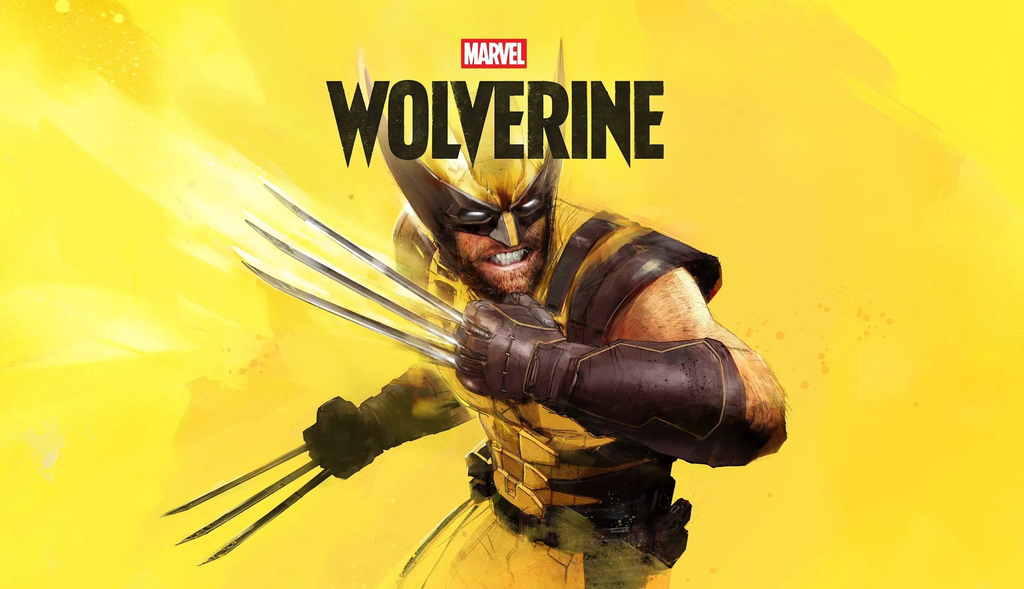
Marvel’s Wolverine released 15 September 2026 with a current 77 Metacritic score.
The Client & Vendor Relationship
I recognize that distinction because I work on the other side of it. As a Senior Program Manager at a Fortune 500 company, I set strategy, manage suppliers, review their work, and bring stakeholders with competing priorities toward a decision. I hire people because their knowledge adds something my team needs. Sometimes the value is additional capacity. Sometimes it is a perspective we do not have. Sometimes it is the willingness to tell us that the thing we have become attached to is not working.
None of those arrangements relieves me of responsibility for what I approve.
If a supplier brings me a recommendation and I accept it, I cannot later describe the result as something the supplier imposed on me. I had an obligation to understand the recommendation, challenge its assumptions, and decide whether it served the objective. The supplier has obligations as well. Poor advice remains poor advice after a client accepts it. A weak deliverable does not become defensible because it went through several rounds of review. Responsibility exists on both sides, but it does not take the same form.
That is relevant to the gaming discussion because developers have described a similar division of authority.
Mary Kenney, then an associate narrative director at Insomniac, publicly explained that consultant contributions require the core development team’s approval. Her account does not reveal every agreement or conversation inside the studio. It does, however, give us something more substantial than the assumption that an outside consultant can dictate the finished game. It also leaves room for a consultant to be influential, which is a point supporters should not evade.
Sweet Baby’s work is not necessarily small. Former narrative director Grant Roberts described assignments ranging from reviewing documents to developing entire narratives.
The reported scope varies across the games being discussed: story consultation on Marvel’s Spider-Man 2, character work and sensitivity reading on Alan Wake 2. Reporting on Suicide Squad: Kill the Justice League describes late-development contributions involving audio logs, incidental dialogue, and in-game advertisements. These distinctions should be the beginning of an argument about responsibility. They cannot tell us everything, but they prevent us from treating every appearance in the credits as the same assignment.
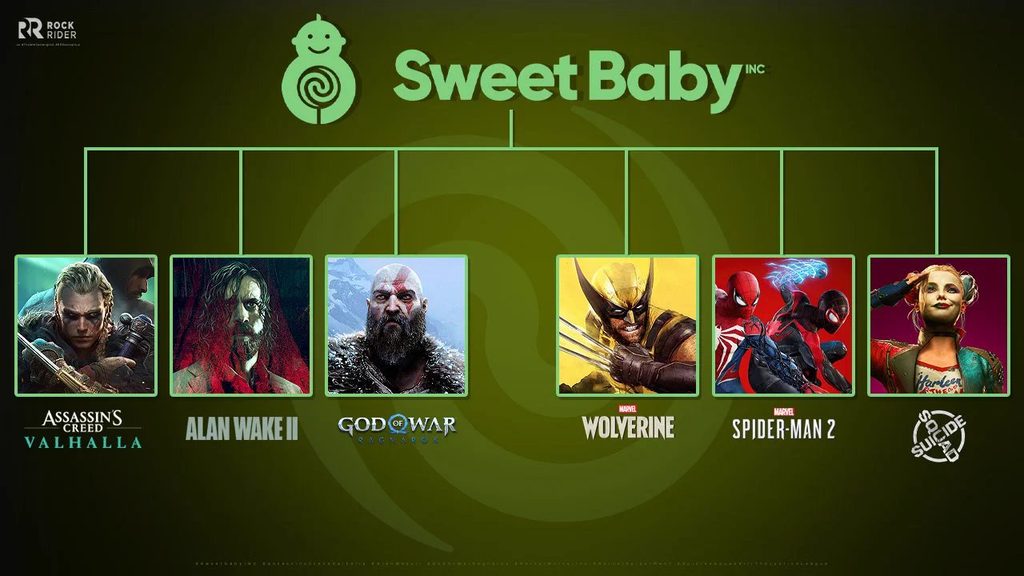
Credit: @ursRockrider
What Consultants Can Bring to a Story
My support for this work comes from what I want out of games. I want writers to have more experiences available to them, more ways to understand a character, and fewer reasons to settle for an assumption that nobody in the room thought to question. I do not expect every developer to arrive with intimate knowledge of every person they might write. Bringing in someone who knows more can be an ordinary act of care for the work. It need not be understood as a surrender of creative judgment.
But care is not the same as accomplishment. A character still needs desires that extend beyond representing a category. Dialogue needs to belong to the person speaking it, rather than sounding like the writer has stepped into the scene to make a point. A game must give players something worth doing. I can believe in the purpose of a scene and still think it is badly placed, badly written, or simply less interesting to play than the developers intended.
The playable Hailey sequence in Spider-Man 2, which presents a Deaf character’s perspective, offers a concrete example. There is something there to evaluate beyond the fact of inclusion: how the sequence communicates, how its interactions work, and whether its position serves the larger game. A player can appreciate the idea and dislike the pacing. That response deserves engagement rather than a judgment about the player’s motives.
With Saga Anderson in Alan Wake 2, a different factual distinction matters: director Kyle Rowley rejected the claim that Sweet Baby was responsible for making her Black. Reported consultation involving Angrboda in God of War Ragnarök concerned characterization and representation, not demonstrated authority over casting.
South of Midnight makes the limits of sweeping judgments very clear. Sweet Baby’s credits include story development, scriptwriting, and narrative consultation. The game won Best Narrative and Game of the Year at the 2026 Canadian Game Awards, alongside honors for art direction, audio design, soundtrack, and best console game. It also received Games for Impact at The Game Awards 2025 and Outstanding Achievement in Animation at the 2026 D.I.C.E. Awards.
That recognition coexisted with criticism. VGC’s Chris Scullion praised the presentation and performances while finding the combat repetitive and limited. Some Wolverine reviews raise a comparable concern: IGN’s Simon Cardy found its combat wore thin, while GameSpot’s Tamoor Hussain criticized its depth and challenge. I am drawing that comparison from the reviews, not claiming firsthand experience with Wolverine. The point is that praise for storytelling and dissatisfaction with combat can both be justified. Neither cancels the other, and narrative consulting credit does not establish responsibility for the combat.
I would not assign Sweet Baby sole credit for big wins like South of Midnight’s awards. That would make the same mistake in a more flattering direction. Its contribution belongs within the work of the larger team.
If I acknowledge that limit when discussing success, I should also insist on it when discussing failure.
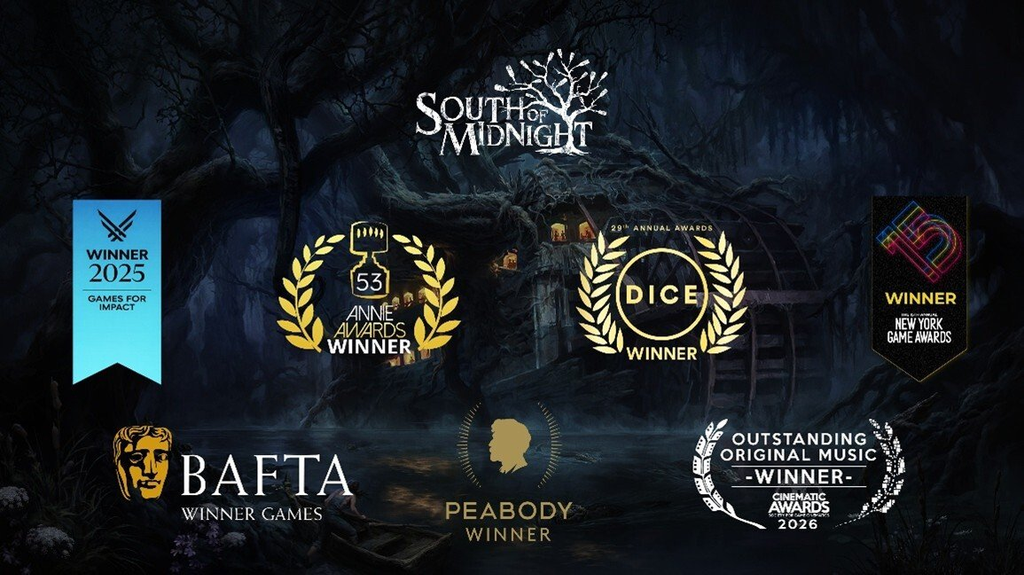
South of Midnight won at least 13 major awards across multiple prestigious ceremonies, including The Game Awards, Annie Awards, D.I.C.E. Awards, British Academy Games Awards, and the Canadian Game Awards.
What the Sales Figures Actually Tell Us
The commercial evidence requires similar restraint. Ragnarök exceeded 15 million copies by November 19, 2023, while Spider-Man 2 surpassed 11 million by April 20, 2024. Those figures undermine the noise that Sweet Baby’s involvement guarantees failure. They do not prove that its work caused either success. Alan Wake 2 followed a slower course, with Remedy reporting that development fees and marketing investments had been recouped by the end of 2024. Subsequent reporting placed sales above three million during the second quarter of 2026.These are different commercial histories, not interchangeable evidence for one explanation.
Unsuccessful games deserve the same precision.
EA reported approximately 1.5 million Dragon Age: The Veilguard player, nearly 50 percent below expectations, in January 2025. But former Sweet Baby Inc CEO, Grant Roberts, denied that they had any involvement with Suicide Squad. I consider the gameplay criticism important, but I cannot turn that judgment into proof that narrative played no part in people rejecting it.
For Wolverine, I could not verify unit sales for this article as of September 17, 2026.
My own experience with Concord belongs within this distinction rather than outside it. I enjoyed playing on PC, questioned its confirmed $40 entry price, and found its cosmetics and progression unpersuasive. Firewalk announced weekly cinematics, but I do not know their cost but I do know that its was an investment that was not worthy for a game within this genre especially considering the fight for time against other F2P games that already have gamers wrapped around their finger (Call of Duty Warzone, Overwatch, Fortnite, Roblox, etc). Sony announced that the game would go offline September 6, 2024, with refunds offered. My questions concern Firewalk and Sony’s product strategy, unlike some gamers I found no reliable evidence establishing Sweet Baby’s involvement, and I would gain nothing by attaching their name to a game I liked but thought was poorly positioned.
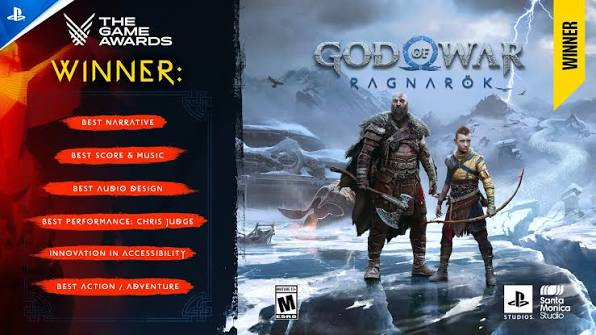
God of War: Ragnarok released on 9 November 2022 with a current 94 Metacritic score.
Criticism Still Needs Evidence
There is no reason this standard should prevent forceful criticism. Players can reject dialogue, character design, pacing, or a price they consider unreasonable. Studios and consultants should be able to explain their work without treating dissatisfaction as evidence of bad character. Public comments deserve scrutiny in context. Harassment should be rejected, but its existence should not become a convenient reason to avoid answering a legitimate complaint.
What I want from the discussion of Wolverine is less certainty about decisions we cannot trace and more attention to the work we can examine. Insomniac’s choices are open to criticism. Sony’s strategy is open to criticism. Sweet Baby’s contributions are open to criticism where those contributions can be established. We do not need to protect any of them from a fair assessment.
As a client, I understand why that assessment must follow the decision through to approval. I can value a supplier’s expertise and still reject its advice. I can accept the advice and later conclude that I was wrong. What I cannot reasonably do is hire someone for their judgment, approve the result, and then pretend that my own judgment was never involved.
At the end of the day gamers should direct respectful feedback to publishers, studios, and development teams rather than use consultants like Sweet Baby Inc. as scapegoats for their dissatisfaction with a game. Otherwise, you are swinging at the wrong boss while the real decision makers remain untouched beyond the fog of war.
Join us on the DISCORD to continue the conversation. Or check out more thoughts like this here.
1st
Thanks for the article!
Great article!